Soft washing begins with the Bridgeport material and deposit
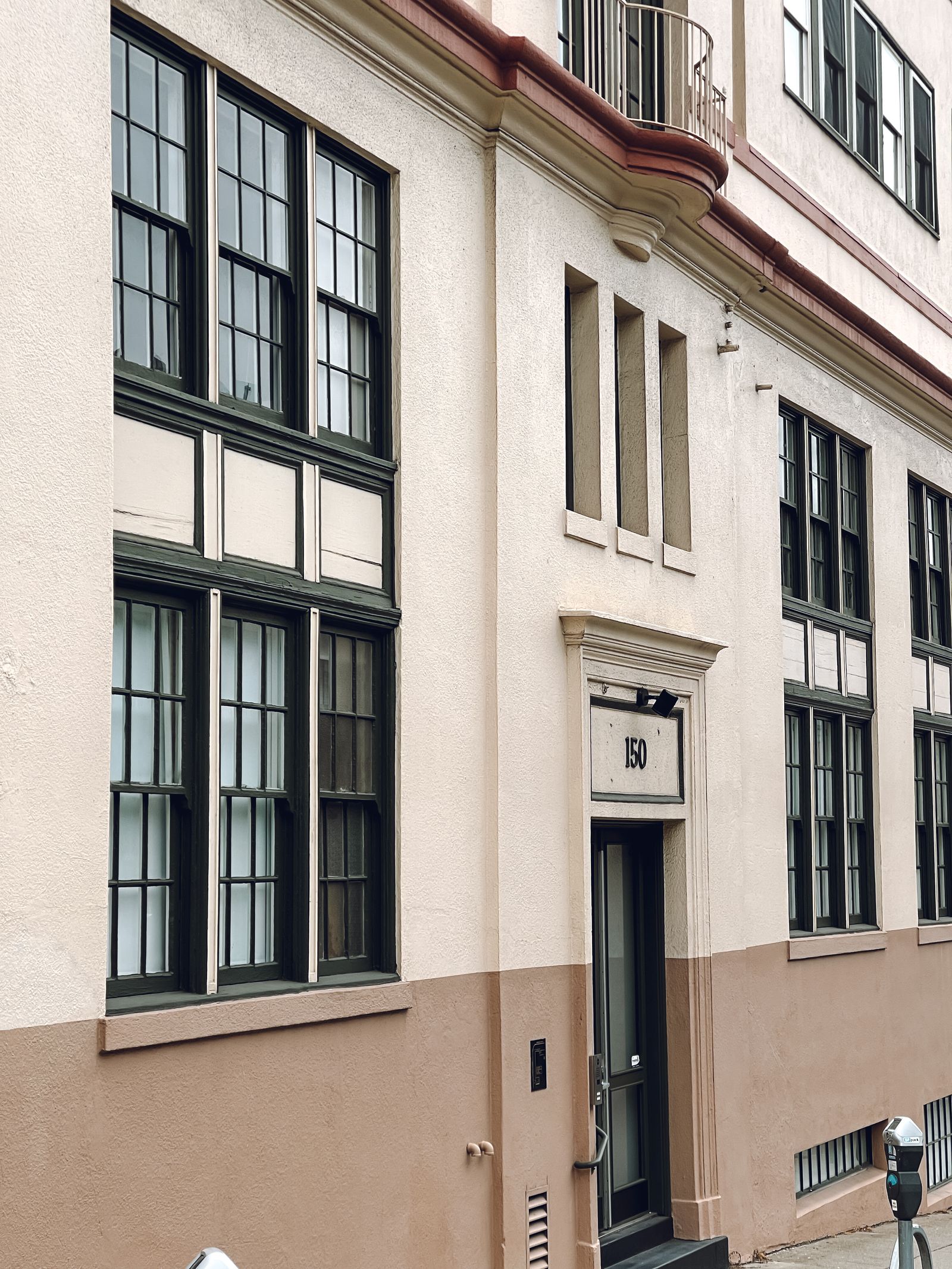
Soft washing generally relies more on compatible chemistry, dwell time, and controlled rinsing than on impact force. It may fit selected brick, masonry, painted concrete, stucco, EIFS, and other tested surfaces affected by algae, mildew, pollen, bird residue, and atmospheric film. Lower pressure can reduce some mechanical stress, but chemistry strength, dwell time, temperature, wind, overspray, landscaping, and failed joints still matter. A test area is valuable where a Bridgeport building has old mortar, mixed repairs, salt exposure, worn paint, or several facade assemblies.
Bridgeport properties commonly combine wall fields with stone trim, storefront glass, metal frames, canopies, signs, loading doors, balconies, and newer additions. A method suitable for brick may be wrong for a painted sign, soft stone, window frame, fragile mortar, or decorative element. Define the result first: recurring maintenance, organic-growth treatment, coastal-residue reset, or specialty restoration. The proposal should state what should improve, what may remain, and which conditions require preservation, repair, coating work, or another specialist.
Pressure washing has a role on durable Bridgeport zones
Controlled pressure can fit sound Bridgeport concrete approaches, loading aprons, parking decks, garage floors, service yards, sidewalks, ramps, and selected durable hardscape after force, distance, flow, drainage, and nearby uses are reviewed. It should not be treated as the default for an entire building. Excessive force can damage old mortar, strip paint, etch soft stone, disturb brick faces, open a joint, or drive water behind a coating. Equipment power is not a substitute for material judgment or a finished-surface inspection.
Lower elevations around Bridgeport may carry road salt, sand, soot, food residue, exhaust, and runoff while upper elevations show pollen, mildew, bird residue, or rain marks. Hospitals, universities, hotels, offices, schools, and port facilities also have people and building systems close to the work. Ask where pressure is proposed, why the material can tolerate it, what protection is required, and how the dry finish will be evaluated. A mixed-method scope is often more accurate than applying one setting to every elevation.
Coastal weather changes timing, drying, and finish expectations
Bridgeport's humidity, salt-laden air, wind-driven rain, winter snow, deicing residue, spring pollen, and summer heat affect staining and drying. Salt and road film often concentrate around curbs, doors, garage ramps, loading docks, parking structures, and port-facing walls. An exposed waterfront elevation may dry differently from a sheltered downtown courtyard or a shaded campus wall. The method should be chosen with the work window and appearance standard, especially when a hospital needs a clear route, a hotel is preparing for guests, or an office is preparing a client-facing entrance.
Rain, thunderstorms, lightning, gusts, fog, freezing temperatures, poor visibility, and slippery public paths can change the decision for either method. Wind affects spray and hose handling and can rule out aerial work. Cold masonry changes dwell and rinse behavior, while rain can move loosened soil back over a completed section. The scope should state wind, lightning, precipitation, visibility, temperature, and pedestrian limits, along with rescheduling and the dry inspection used after an interruption.
Compare drone assistance with lifts and contact access
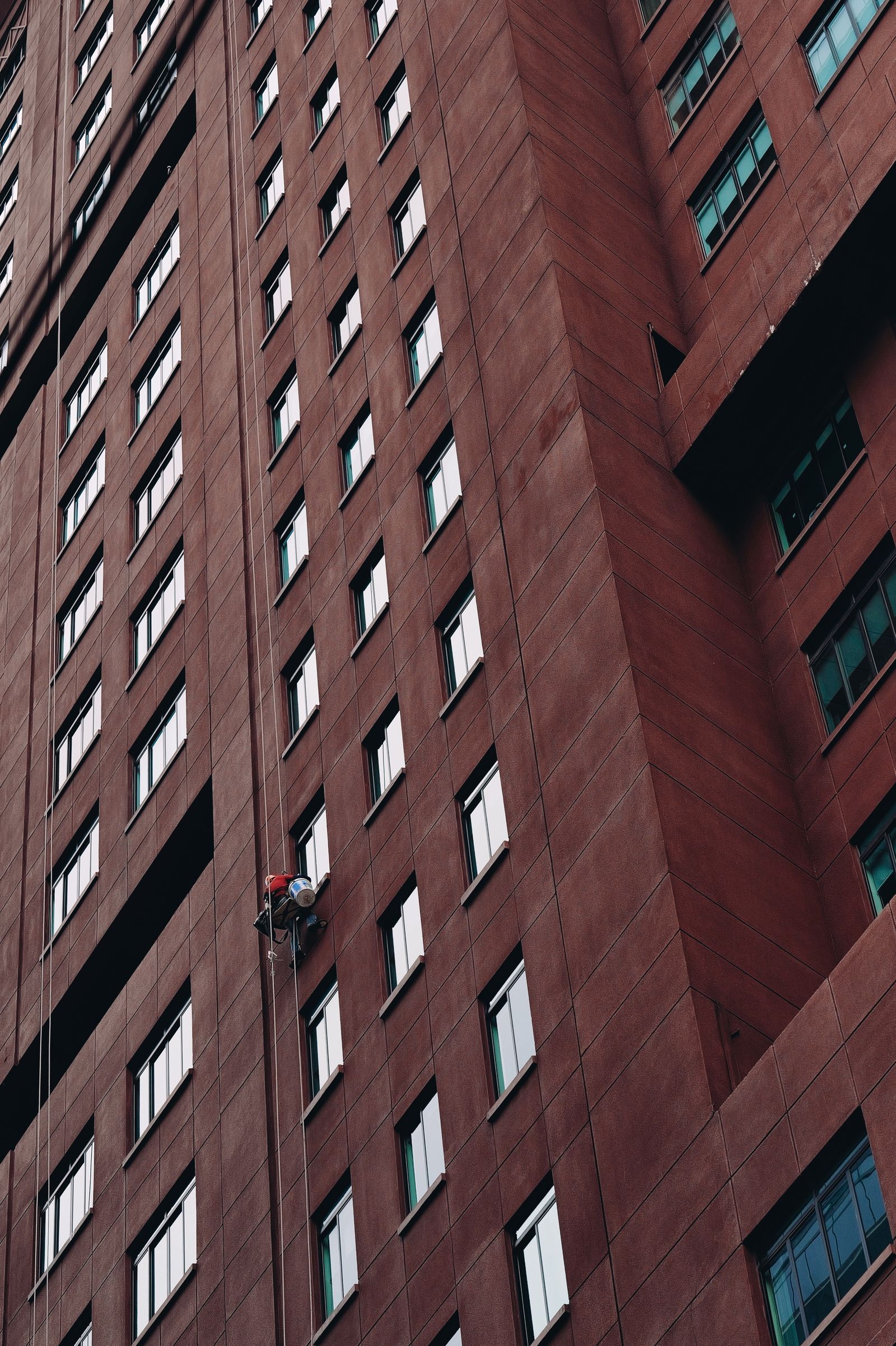
Drone-assisted wetting or rinsing may reduce lift staging for broad, compatible upper wall, parapet, ledge, or rinse zones. That benefit depends on wind, stand-off distance, airspace, line of sight, launch and recovery space, water supply, public separation, and the desired finish. It may fit an open university or industrial building. It may be unsuitable on a narrow downtown block, beside port cranes or overhead wires, near an event, around active loading, or where public movement cannot be separated from the work area.
A drone cannot squeegee, scrape, brush, polish, repair mortar, inspect a joint by touch, or detail every recess and cornice. Window frames, storefronts, awnings, balconies, canopies, and residue around entries often need contact work. Bridgeport traffic, rail and port activity, utility corridors, medical facilities, and event venues may require additional airspace and ground review. Commercial operations must comply with FAA requirements, and property permission does not remove those obligations. A good proposal identifies aerial, ground, lift, pole, and hand-detail zones separately.
Drainage and building users belong in the comparison
A Bridgeport cleaning plan should identify water availability, site slope, catch basins, basement doors, garage ramps, planted beds, public sidewalks, loading areas, harbor-facing paths, and where used water may travel. A hospital, downtown office, hotel, school, university, port facility, and warehouse can each have different discharge and pedestrian risks. Before work begins, the property and contractor should agree on protection, collection, diversion, filtration, disposal, or other controls for the actual product, volume, soil, and drainage path. Do not assume a low-pressure rinse has no runoff concern.
When comparing proposals, ask how each crew will protect brick, mortar, stone, windows, doors, landscaping, vehicles, patients, employees, students, guests, tenants, pedestrians, and building systems. Ask how emergency and accessible routes remain usable, where hoses travel, and who may stop the work. For an aerial proposal, ask which elevations are expected to be handled from the air and which require contact access. Those answers reveal real disruption and finish expectations better than a pressure number or a speed promise.
- Require material identification, a test-area plan, an elevation-specific method, and a stated expected finish.
- Separate maintenance cleaning from historic restoration, detailing, repairs, and coatings.
- Review coastal exposure, port activity, access, weather, people, water, and runoff controls.
- Request completed-zone photos and notes about remaining deposits or recommended repairs.
Get a Bridgeport-specific recommendation before approving work
Soft washing may be a strong starting point for compatible organic staining, pollen, bird residue, and atmospheric soil on selected facade materials. Controlled pressure may be appropriate for sound hardscape or other durable zones. Rinsing, pole work, lift access, hand detail, or preservation-oriented restoration may be needed elsewhere. The most reliable plan often combines methods because a Bridgeport property is a collection of materials and operating zones, not one uniform surface. A test area can confirm expected visual improvement before the full scope is approved.
Drone Building Cleaners can review Bridgeport hospitals, medical properties, university and school buildings, hotels, offices, retail centers, port facilities, warehouses, garages, campuses, mixed-use properties, and industrial exteriors. We can discuss facade washing, upper wetting and rinsing, ledges, canopies, parapets, roofline details, and recurring exterior maintenance while identifying where contact work or another specialist is more appropriate. The recommendation stays focused on the building's condition, the property's operations, and the finish the customer needs.
For a quote, call +1 239-351-2897, email contact@dronebuildingcleaners.com, or submit property details through the contact form. Include the Bridgeport address, target elevations, photos, approximate height, visible stains, and timing or occupancy constraints. We will recommend the next practical review step and prepare a customer-facing scope that explains what can be cleaned, how it will be approached, and what should be referred for separate work.